You’re Not Crazy. You’re Just Led by a Very Stressed Inner Teen

When you’ve had enough of being quiet. Photo by Luz Fuertes on Unsplash
Ever find yourself in an argument, saying things you swore you’d never say again? Or ghosting someone even though you wanted connection? No, you’re not broken. But chances are, there’s a younger part of you calling the shots—and they’re terrified.
Most of us don’t wake up thinking, “You know what would be fun today? Repeating a childhood trauma pattern.” But here we are—people-pleasing, freezing up when someone gets too close, replaying old scripts on loop. We tell ourselves we should know better, that we’re too old for this shit, that we’ve done the work.
But here’s the truth: knowing better doesn’t mean your inner 14-year-old isn’t panicking in the background, doing their absolute best to keep you safe. They’re clever, fierce, maybe a little dramatic—and completely unequipped to run your adult life.
Staying Small Was Never a Personality Trait
If you grew up with emotional neglect, inconsistency, or outright chaos, there’s a good chance you learned how to disappear. Not physically, maybe, but emotionally. You got quiet. You stayed agreeable. You overachieved or shut down. You built a whole personality around being “easy to be around” because the alternative felt dangerous.
That’s not who you are. That’s who you had to become.
But then you grow up. And all of a sudden, you’re in a career, a relationship, a friend group—and you find yourself stuck. Playing small. Terrified to speak up, set boundaries, or god forbid, have needs. Why?
Because deep down, a younger part of you still thinks being seen is unsafe.
The Inner Teen: Smart, Scared, and Running the Show
The inner teenager gets a bad rap. They’re labeled as moody, rebellious, self-centered. But the truth? They saw through a lot of bullshit early. They figured out how to read a room. They learned fast how to protect you—with sarcasm, withdrawal, perfectionism, or rage.
For a lot of us, they’re still leading, especially if you’ve dealt with social anxiety, people-pleasing, or the pressure to perform like you’ve got it all together (hello, high-functioning anxiety).
And if you’re a woman, or raised as one, you probably learned early on that being liked was the same as being safe. That love had to be earned by shrinking, pleasing, and getting it right. Queer folks know this feeling, too. You grow up watching what you say, gauging safety, scanning for signs of rejection.
That fear of doing it wrong and getting kicked out of the group, the relationship, the family? That’s not overthinking. That’s survival. And it’s still in your body, even if no one’s saying the words out loud.
When we’re overwhelmed, anxious, or unsure, and when emotional overload hits, we fall back into patterns that made sense back then. That might look like:
Overexplaining yourself to avoid rejection
Shutting down instead of saying how you feel
Going numb, then blaming yourself for not being “present”
Picking fights just to feel something
Sabotaging good stuff because you don’t quite trust it
Sound familiar?
These aren’t random quirks. They’re survival strategies your system came up with on the fly.
These Parts Are Doing the Best They Can
Parts therapy (a cousin of IFS) helps us name and work with these inner voices—not to get rid of them, but to understand them. Your 13-year-old self may not have had power back then, but they had instincts. And now? They’re still stepping in when things feel even a little unsafe.
Sometimes in therapy, I meet people’s parts before I meet them.
The inner teen stomps in with, “Whatever. This is stupid.”
The inner six-year-old is hiding under the table hoping I don’t make them talk.
And once we build enough safety, the adult shows up and says, “Okay… I’m ready.”
This is some of the best work I get to do. Because helping those younger parts find relief, trust, and a seat at the table (without running the whole damn show) is where healing lives.
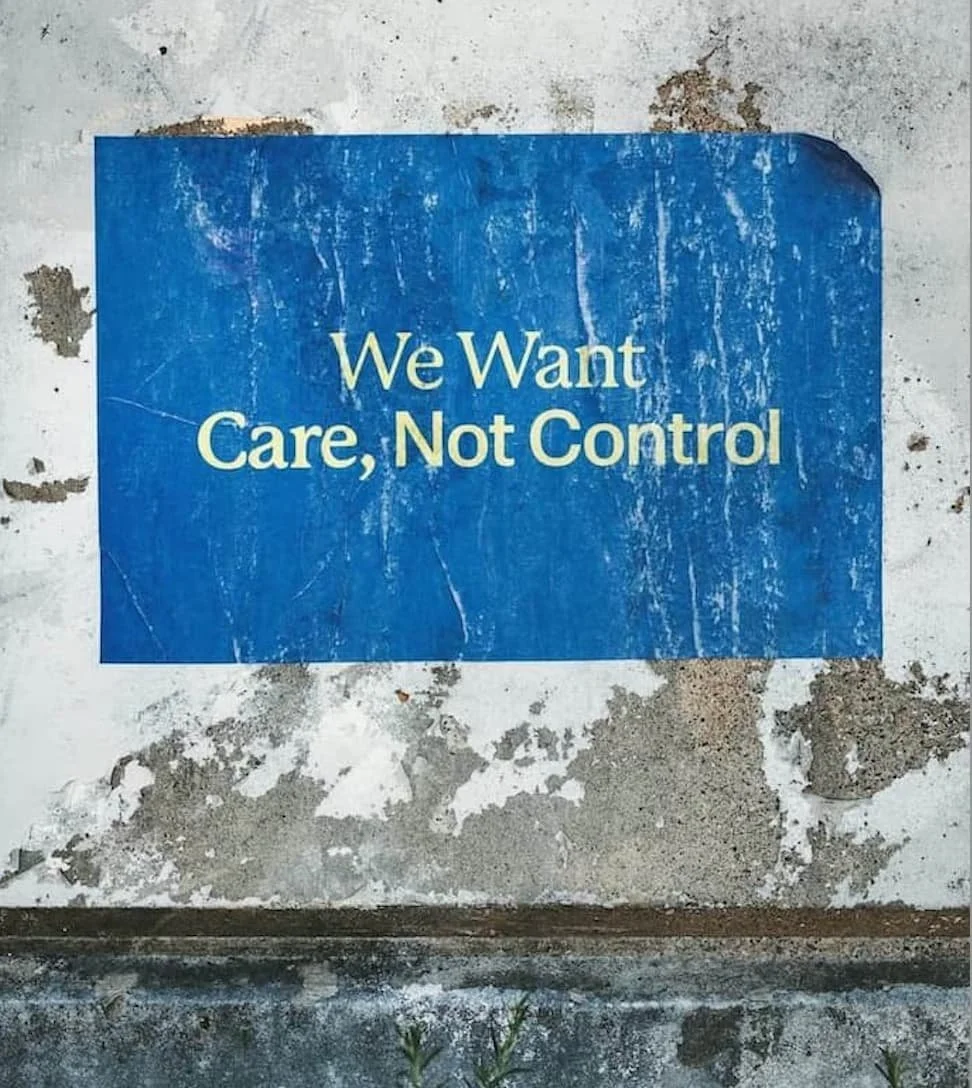
We Don’t Need to Be Fixed—We Need to Be Heard Photo by Tim Mossholder on Unsplash
Why Being Seen Matters More Than You Think
For people who grew up feeling invisible or dismissed, being seen and heard without judgment can be healing in ways words can't describe. It tells your system: You're safe now. You matter even when you're messy. You’re allowed to take up space.
And that need—to be seen, to belong—isn’t weakness. It’s universal. It’s why some people go all in on MAGA, QAnon, or culty self-help communities. It’s why people pick a side and stay there, even when it hurts them. Belonging means safety, even if the “family” you belong to is built on fear or falsehood.
For folks struggling with social anxiety, people-pleasing, or high-functioning perfectionism, this hits especially hard. You learned early on that showing your true self could cost you connection. And now? Your nervous system still believes it.
That’s why therapy is so powerful. Because real belonging doesn’t require you to silence parts of yourself to stay connected. You don’t have to perform. You don’t have to believe what everyone else believes. You get to show up as you are: anxious, angry, burned out, deeply feeling, and still be worthy of connection.
Therapy becomes more than coping. It becomes reclaiming the parts of you that were silenced.
That’s not fluff. That’s repair.
When the World’s on Fire, Old Wounds Flare Up
Let’s not pretend this is just about the past. You’re doing all of this in real time, in a world that feels like it’s imploding.
Authoritarianism is back on the ballot. DEI is under attack. Queer and trans rights are being stripped. And the internet is one giant FAFO experiment, where everyone’s angry and no one wants to listen.
And you’re expected to navigate all this? Keep your job, your relationships, your entire nervous system, and your self-worth intact?
No wonder your inner parts are on high alert.
When the outside world feels unsafe, the inside world scrambles to keep up. And if you were taught early on to be the peacekeeper, the fixer, the “good one,” then yeah—your system is working overtime right now.
And it’s not just chaos. It’s parental chaos.
In parts work, we talk about the Self as the inner adult. But culturally, many of us look to national leadership as a kind of “parent” figure—someone who's supposed to model safety, consistency, and care. When that figure is cruel, erratic, or flat-out abusive (hello Trump), your inner system reacts like it’s back in a dysfunctional household. Some of us even ache for a missing “mother energy.” A force that comforts, protects, or shows up. But when that never arrives, the weight falls on your internal system to make sense of the madness.
That’s exhausting, and deeply triggering. Even if we’re not conscious of it.
You might find yourself:
Numbing out when friends post political horror shows
Shutting down instead of replying to your family’s “well-meaning” text
Feeling like you’re failing everyone by not doing more—even though you’re already burned out
This isn’t a personal flaw. It’s your internal system trying to survive a collective breakdown.
FAFO Culture, Fragile Relationships, and Political Landmines
You’ve probably seen it: someone sets a boundary, calls out injustice, or posts a fiery TikTok—and it ends with, “welp, they FAFO’d.” (For the uninitiated: Fuck Around and Find Out.)
And while yes, it can be hilarious watching racists, misogynists, and tyrants get called out publicly—that energy seeps into real life. And not always in a satisfying way.
Lately, I’ve had clients say things like:
“I can’t talk to my brother anymore. He sends me conspiracy videos and says I’m brainwashed.”
“My coworker said DEI should be illegal. I want to say something, but I don’t want to lose my job.”
“I’m biting my tongue constantly. I’m exhausted trying to keep the peace with people I used to love.”
“How do I not scream when my aunt says Trump is misunderstood?”
We’re living in a giant FAFO moment. Relationships that once felt solid now feel like landmines. Friendships are ending. Families are fracturing. And if you’re a sensitive, justice-oriented, trauma-informed human, it’s brutal.
But here’s the kicker: for people who grew up needing to stay small or be “the nice one,” this tension doesn’t just feel uncomfortable.
It feels dangerous.
Because your system was wired to survive by keeping the peace.
So now you’re stuck in an impossible loop:
Say something, and risk rupture. Say nothing, and betray yourself.
That’s not just a dilemma. That’s a trauma response meeting a political crisis. Your inner parts—especially the ones who once kept you safe by fawning, freezing, or avoiding conflict, are working overtime right now.
No wonder we’re all exhausted. No wonder it feels like we’re losing people, or losing ourselves..
Real-Life Example: Me at the Front Door, Losing My Mind
Here’s a thing I’ve had to unlearn (and I’m still not always successful. Just ask my family): I used to walk in the door and get irritated if no one looked up and greeted me. Or worse. If someone was watching TV. It was like walking into an emotional landmine. It felt like every muscle in my body would tense. Rage simmering.
Why? Not because I'm a complete ass. Because that moment used to mean I didn’t matter.
As a kid, I’d come in the room hoping for attention or connection, and get nothing but Johnny Carson, or the news. Being invisible hurt. And now, 50+ years later? That part of me still shows up. Expecting disappointment, bracing for rejection, and ready to scream.
So now I do something different: I pause. I take 15–30 minutes to reset. I try not to take care of anyone,(including the dogs), until I’ve checked in, usually changed my clothes, and get present for the people I love.
Sometimes I remember. Sometimes I don’t. And when I don’t, my inner teen takes the wheel, and some sort of unspoken resentment takes over until I realize what’s happening.
That’s parts work in real time.
This Is Why Talk Therapy Actually Works (Even When It Looks Like Nothing’s Happening)
Some people roll their eyes at talk therapy—especially long-term therapy.
“Aren’t you just talking about your childhood again?”
“Shouldn’t you be over this by now?”
But that view misses the whole damn point.
The kind of therapy I do isn’t just venting or intellectualizing or talking in circles. It’s relational.
And that means stuff is supposed to come up between us. You get to feel safe enough to let old patterns play out, then we slow down, notice, and work through whatever’s going on.
That’s not wasting time. That’s healing in motion.
Sometimes that looks like finally being honest without editing yourself for my feelings.
Sometimes it’s sitting with the discomfort of silence instead of rushing to fill the space.
Sometimes it’s recognizing that you’ve never had a relationship where your needs mattered, and letting therapy be the first one that does.
Therapy isn’t just about understanding the past. It’s about finally giving yourself the space to be seen, heard, and held without having to perform.
(Often, it’s about getting to know the younger parts of you—the anxious teen, the scared kid who’s still carrying the old survival strategies.
You don’t have to take care of me.
You don’t have to people-please.
You don’t have to be impressive or “make progress fast.”
You just have to show up. As you are.
And over time, that changes everything.
Healing Means Letting the Adult You Take the Wheel
This is where the work begins. Not by shaming those parts, but by showing up for them.
You don’t need to exile the teen in you who slams doors and storms off. You need to ask them what they’re afraid of, and let them know you’ve got it now. Same with the terrified 7-year-old who thinks they’re going to be punished for getting it wrong. They don’t need a scolding. They need a safe place to be scared, without running your life.
This is also where Nonviolent Communication (NVC) comes in: by looking beneath the emotional explosion and finding the unmet need underneath. The goal isn’t to suppress feelings—it’s to translate them.
That anger? It’s pointing to a need for respect.
That anxiety? A need for safety or control.
That people-pleasing? A need for connection without rejection.
When we start identifying what we actually need, instead of what we were trained to want (approval, invisibility, control), we start building an internal system that makes sense.
You're Not a Mess. You're a System in Recovery.
You’re healing in a world that’s trying to convince you to shut down, stay small, and stay quiet. And it’s not just political, it’s personal.
Families are fractured. Friendships are ending. Conversations feel like minefields. It’s 2025, and everything feels high-stakes. But here’s the thing:
If your inner 14-year-old is losing it because the world is actually scary right now, they’re not wrong.
But they don’t have to carry it alone anymore.
You get to lead.
And that is resistance in real time.
That is power.
That is healing.
Even if they roll their eyes and say, “whatever.”
If This Resonates
This is exactly the kind of work I do with clients. Long-term therapy isn’t about fixing you, it’s about helping you reclaim your voice, your needs, and your life.
If you’re a high-functioning, perfectionistic, rebellious spirit who’s tired of holding it all together while quietly falling apart. I see you.
I offer trauma-informed teletherapy across Oregon.
Disclaimer: This blog reflects my thoughts on mental health and isn’t a substitute for therapy. The advice is general and may not fit everyone. If you’re struggling, please reach out to a licensed mental health professional.