Protesting: Why Resistance Still Works (and Why They Want You to Think It Doesn't)
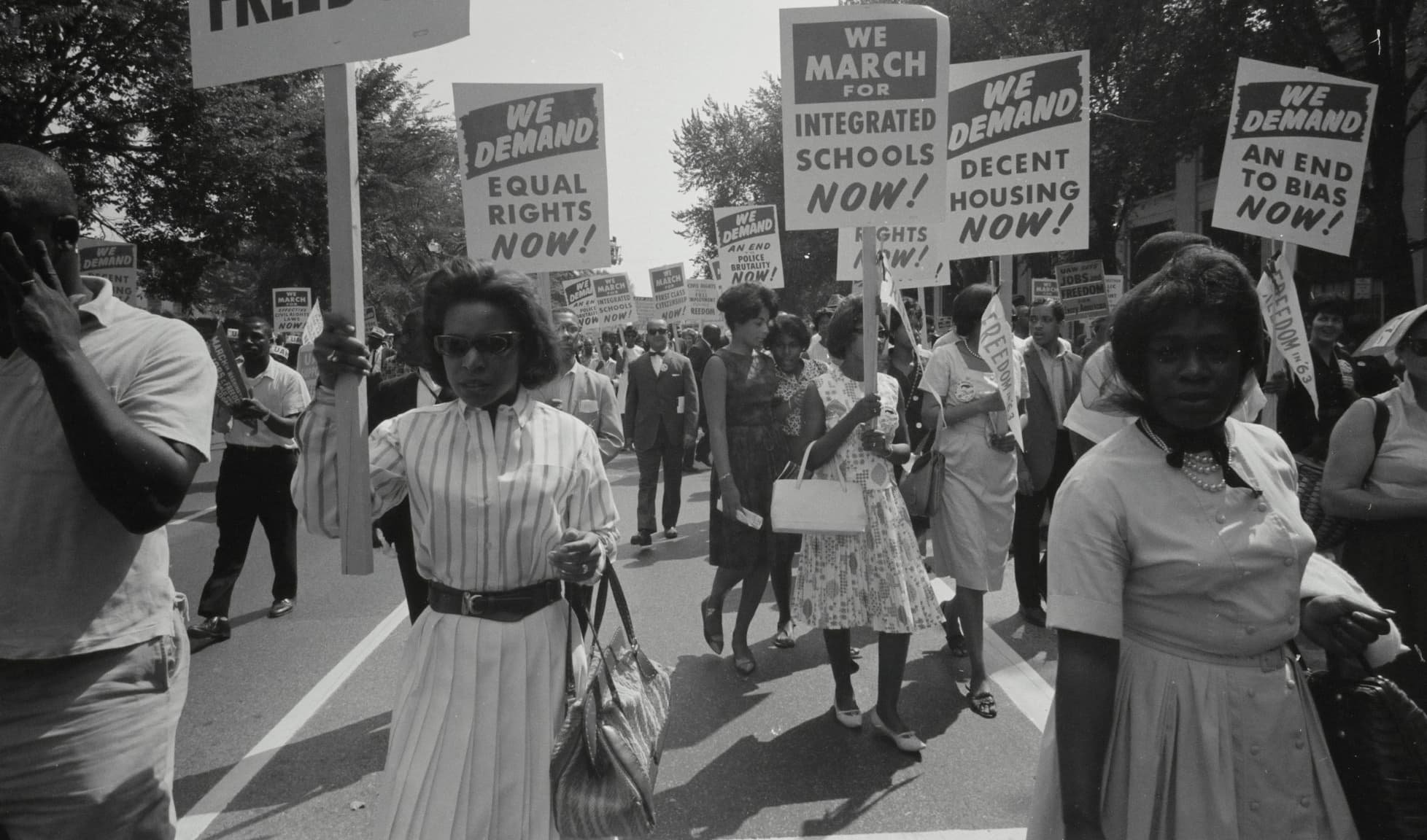
Civil Rights March Photo: Library of Congress Unsplash
This Is What Democracy Looks Like: Protesting Then and Now
Recently, I stood among hundreds of men and women in Eugene, holding signs, chanting, and feeling the honks of solidarity—along with the occasional middle finger from passing cars.
The chants were familiar: This is what democracy looks like.
The fight felt familiar, too. Women of my generation locking eyes with the same exhausted disbelief: How the hell are we still fighting for this?
My First Protest Arrest: The Trojan Nuclear Plant Occupation
In November 1977, I was one of 123 people arrested at the Trojan Nuclear Power Plant. It was one of the first occupations of a nuclear facility, organized by the Trojan Decommissioning Alliance, and a direct challenge to the unchecked expansion of nuclear power.
My fear wasn’t just about radiation or catastrophic failure. It was about the waste. No one had answers on where to store it, how to keep it contained for generations, or what long-term damage we were unleashing. It was the kind of willful ignorance that makes my skin crawl.
But that protest? It was actually a hell of a lot of fun. Buses were parked and waiting, like we were some kind of dangerous insurgency. We were zip-tied and carted off in a mass arrest, then put in holding cells while they figured out what to do with us. The sheriffs gave us a few romance novels to pass the time, so we read them out loud to one another and laughed like crazy.
In December, I went to court in Rainier, Washington, and was acquitted along with 95 other people who’d been arrested. And the fight continued.
Fifteen years later, Trojan was shut down permanently.
Take Back the Night: Confronting the Fear We Grew Up With
I don’t remember my first Take Back the Night march exactly, but Los Angeles, maybe 1980, stands out. Hundreds of women marching through the streets after dark, shouting, chanting, refusing to let fear keep us inside.
And as I walked, I realized something that shook me: I was afraid of the dark.
Not in the way children are afraid of monsters under the bed, but in the way women are taught to fear: because darkness belongs to men, to danger, to all the things that could happen to you if you dare to take up space at the wrong time, in the wrong place.
But that night, we took it back.
From Then to Now: Women’s Rights, Protest, and Resistance
The International Women’s Day protest in Eugene had that same fire. It wasn’t a march. It was a street demonstration stretching across the Ferry Street Bridge, with people holding signs and taking up space.
The messages were sharp, defiant, and sometimes funny:
🚩 YOU CAN’T SPELL HATRED WITHOUT RED HAT.
🚩 BAD DOGE-Y!
🚩 THIS MUSK STOP!
🚩 THE ONLY MINORITY DESTROYING AMERICA IS THE BILLIONAIRES.
Even after all these years, I still get that same feeling at protests: the exhaustion, the anger, but also the sheer joy of resistance.
We are not alone. And we are not done.
Protests Built This Country: A History of Resistance
And you know what?
Protesting works.
1973 – Abortion rights weren’t simply handed down by politicians. They followed years of organizing, activism, and protest demanding reproductive freedom.
1992/93 – Trojan Nuclear Plant? Shut down permanently after years of relentless opposition.
2015 – Marriage equality became law after decades of grassroots organizing, protest, and LGBTQ+ activism.
Every right we have today was won. Not given. By people taking to the streets. By people making noise.
Our protests didn't emerge from a vacuum. We stood on the shoulders of those who fought before us.
The Civil Rights Movement – Black Americans risked everything to demand the right to vote, to end segregation, and to be treated as equals. Their courage helped lay the groundwork for generations of movements for justice.
The Stonewall uprising in 1969 – LGBTQ+ people, including transgender women of color like Marsha P. Johnson and Sylvia Rivera, pushed back against police harassment and violence, helping spark the modern gay liberation movement.
Labor strikes and worker uprisings – From the early 1900s to today, workers have gone on strike to demand fair wages, decent working conditions, and the right to unionize. Many of the protections workers have today came through those battles.
These earlier struggles taught us something I still believe: resistance is essential, and change is possible.
Why Protest Feels Exhausting—and Why It Still Matters
I get it. I’ve been protesting since the '70s. I know how it feels to stand in the street and wonder if it matters.
Protesting is exhausting. And sometimes, there’s a price to pay.
For me, that price showed up almost 45 years after my first protest arrest.
In 2020, while reapplying for my social work license during the COVID pandemic, that 1977 arrest got flagged.
At first, I thought there had to be some mistake. I’d been licensed since 1999 and had been background checked multiple times over the years.
So I called the people who handle background checks in Oregon.
Yep. It was real.
That old protest arrest was still there.
I actually had to write a letter to the FBI explaining why I should be allowed to keep my social work license. Why I wasn't a bad person. Why, after decades of doing this work, I should be allowed to continue doing it.
So we drafted the letter.
And somewhere in the middle of all of this, I had to laugh.
WTAF?
I'd been arrested in 1977 for protesting nuclear power. I'd been acquitted. Nearly half a century later, that arrest had resurfaced as a question about whether I was fit to be a social worker.
Apparently, resistance has a very long memory.
Kindness, Resistance, and the Power of Being Loud
I've learned that resistance doesn't always look the way we expect it to.
Sometimes it's standing in the street with hundreds of other people. Sometimes it's getting zip-tied, hauled off to holding cells, then reading romance novels out loud with your fellow protesters and laughing until you can't breathe.
Sometimes it's writing a letter to the FBI forty-three years later, explaining why an old protest arrest shouldn't keep you from doing the work you've been doing for decades.
And sometimes it's simply showing up again.
Protesting is exhausting. Resistance can have a price. But so can silence.
Be kind when kindness can move something forward. And when it's time to be loud, be loud.
We are not alone. And we are not done.
Disclaimer: Reading this blog isn’t the same as therapy. If you’re struggling, please reach out to a licensed mental health professional — you don’t have to do this alone.