Bisexual vs. Pansexual: What’s the Difference?
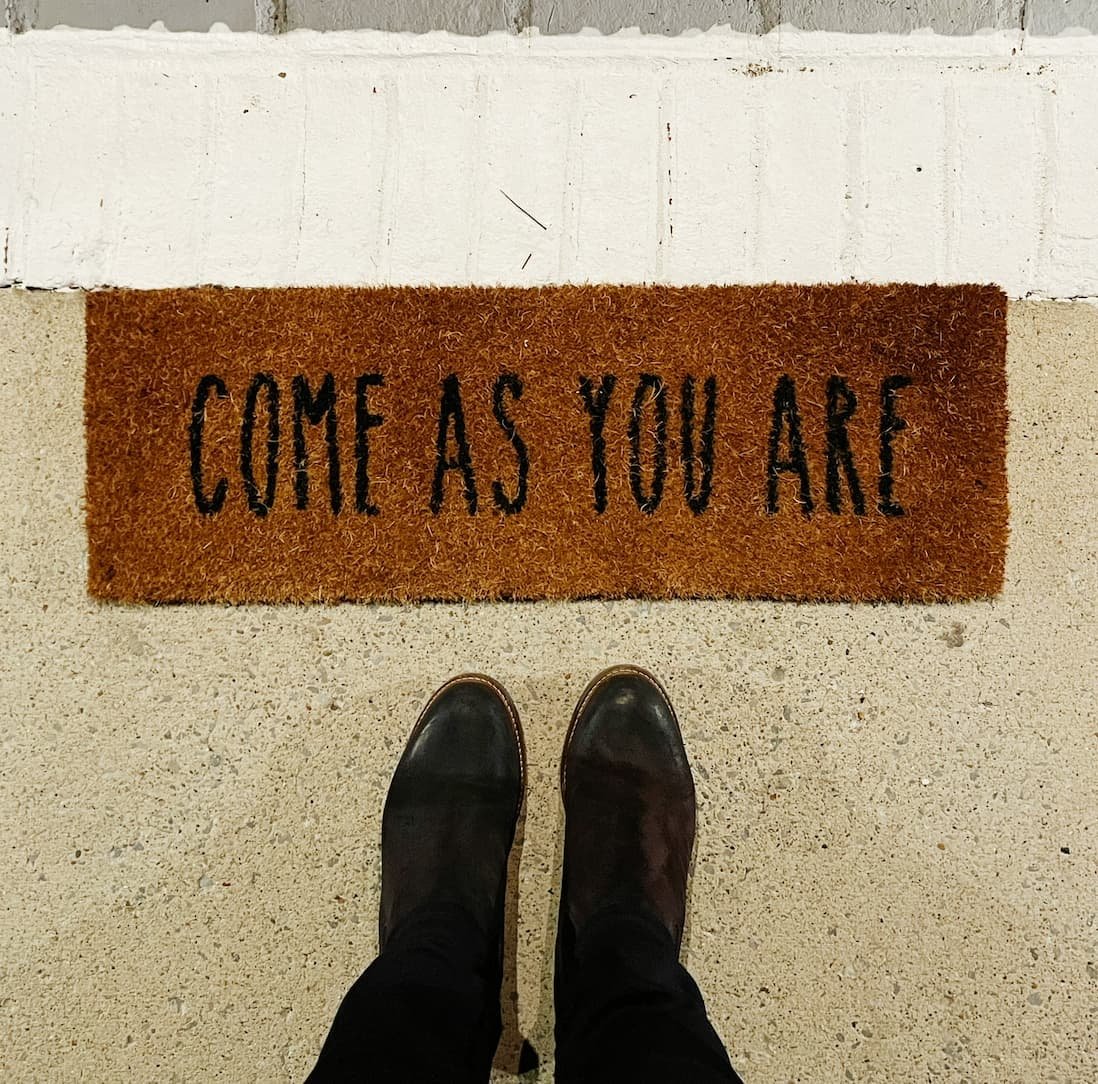
“Come as you are.” Photo by Jon Tyson via Unsplash
If you’ve ever tried to figure out the difference between bisexual and pansexual, you may have discovered that asking the internet doesn’t necessarily clear things up.
Bisexual means two genders.
No, it means more than one gender.
Pansexual means gender doesn’t matter.
Actually, bisexual can mean that too.
Helpful.
The truth is, bisexual and pansexual overlap quite a bit, and people don’t always use the words in exactly the same way. Neither identity requires a particular dating history, a 50/50 split in attraction, or proof that you’re “queer enough” to use the label.
I’ve identified as bisexual since I was a teenager in the 1970s, when bisexual was pretty much the only word I knew for what I was experiencing. The language has expanded considerably since then. These days, I also use Bi+ and queer.
So what actually is the difference between bisexual and pansexual? And if more than one label seems to fit, how the hell are you supposed to choose?
Let’s start with what the words mean.
What Does Bisexual Mean?
At its simplest, bisexual means having the capacity to be attracted to more than one gender.
That attraction doesn't have to be equal. It doesn't have to happen at the same time, or in the same way. You might be mostly attracted to women and occasionally attracted to men. You might be attracted to people across the gender spectrum. Your attractions may shift over time.
None of that makes you more or less bisexual.
And despite one of the more persistent misconceptions about the word, bisexual doesn't mean you're only attracted to men and women. The bi in bisexual has a long and complicated history, but contemporary bisexuality isn't limited to two genders or to cisgender people.
One definition I've returned to for years comes from bisexual activist Robyn Ochs.
I like her definition because it leaves room for something that gets lost when we try to make sexuality fit into neat little boxes: attraction isn't always symmetrical.
“The potential to be attracted romantically and/or sexually to people of more than one gender—not necessarily at the same time, not necessarily in the same way, and not necessarily to the same degree”
You don't have to be 50% attracted to women and 50% attracted to men. You don't have to have dated or slept with people of multiple genders. And the gender of the person you're currently partnered with doesn't determine your sexual orientation.
You can be bisexual and single. Bisexual and married. Bisexual in a same-gender relationship. Bisexual in a relationship everyone around you reads as straight.
You're still bisexual.
What Does Pansexual Mean?
Pansexual generally means having the capacity to be attracted to people regardless of gender.
For some pansexual people, gender isn't much of a factor in attraction. For others, gender may matter and they may have preferences, but it doesn't determine who they have the potential to be attracted to.
And just like bisexuality, pansexuality doesn't mean you're attracted to everyone. Attraction is individual. You may have preferences. And you still get to say no.
Being pansexual also doesn't tell us anything about how many people someone dates or sleeps with, whether they're monogamous or non-monogamous, or what their current relationship looks like. It's a sexual orientation, not a description of someone's relationship style or sex life.
And this is where things get a little messy.
Because if bisexuality can mean attraction to more than one gender, and pansexuality can mean attraction regardless of gender, there's a hell of a lot of overlap.
Which brings us back to the question:
Bisexual vs. Pansexual: What's the Difference?
There isn't a neat dividing line between the two.
Bisexual generally describes attraction to more than one gender, while pansexual generally describes attraction regardless of gender. But in real life, that distinction can get blurry pretty quickly.
A bisexual person may experience gender as an important part of attraction. Another bisexual person may be attracted to people regardless of gender. A pansexual person may feel that gender has little or nothing to do with attraction, while another may notice gender and still feel that it doesn't limit who they can be attracted to.
In other words, two people can experience attraction in very similar ways and choose different labels for themselves.
Neither label is more inclusive, more evolved, or somehow more queer than the other. And bisexuality doesn't exclude trans or nonbinary people.
The difference often comes down to which word best describes your experience, your history, and the community you feel connected to.
Why I Use Bi+ and Queer
I’ve used the word bisexual since I was a teenager. In the 1970s, it was the word I had for being attracted to more than one gender. Pansexual existed, but it wasn’t part of my vocabulary, and neither was Bi+.
Bisexual still feels like home. It’s part of my history and how I’ve understood myself for decades. But language changes, and these days I often use Bi+ because I like the room it creates for the many ways people experience attraction beyond monosexuality.
I also use queer. It’s broader, a little less interested in putting me in a particular box, and increasingly it’s the word that feels most comfortable to me.
Could pansexual describe my experience? Probably. I’ve been attracted to people across genders and across the gender spectrum. Gender has never been the thing that determines whether I can be attracted to someone.
But I don’t identify as pansexual.
And I think that matters when we talk about labels. A definition can fit you without having to become your identity.
You get to decide which words feel like yours.
How Do I Know if I’m Bisexual or Pansexual?
You don't have to take a test, tally up everyone you've ever been attracted to, or figure out exactly what percentage of your attraction falls where.
Ask yourself a few questions instead:
Am I attracted to more than one gender?
Does gender play a role in who I'm attracted to?
Does regardless of gender describe my experience better?
Which word feels more familiar or comfortable to me?
Is there a community or history connected to one of these labels that feels like mine?
You may find that bisexual fits. Or pansexual. Or both. You might prefer Bi+, queer, fluid, or no particular label at all.
And you can change your mind.
A label isn't a contract. You don't have to keep using a word just because it once helped you understand yourself. Sometimes our sexuality shifts. Sometimes the sexuality hasn't changed at all, but we finally find language that fits it better.
Disclaimer: This blog reflects my thoughts on mental health and isn’t a substitute for therapy. The advice is general and may not fit everyone. If you’re struggling, please reach out to a licensed mental health professional.