Your Inner Critic Isn't the Enemy. It's Trying to Keep You Safe.
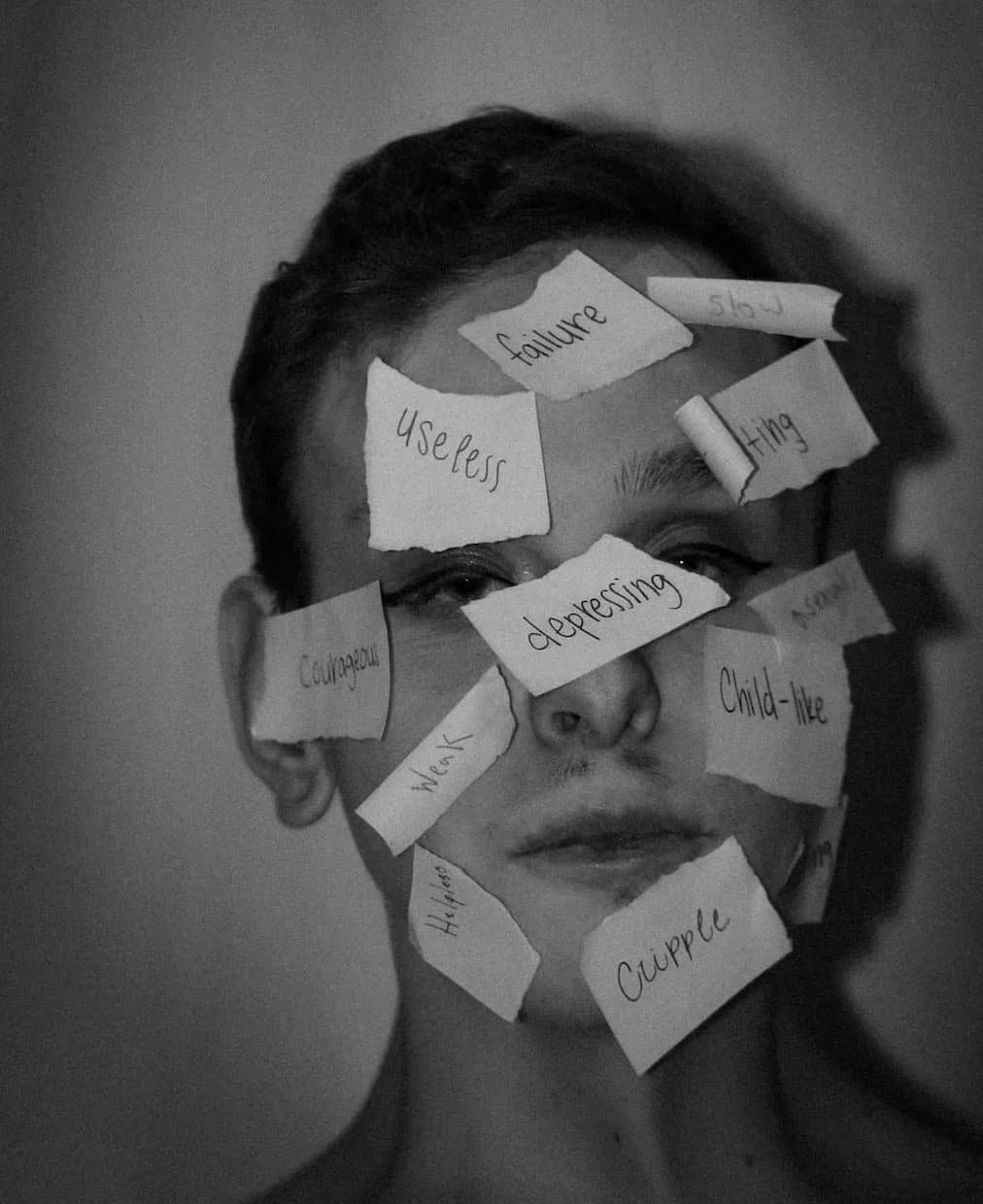
Like wearing other people’s words on your skin — that’s the inner critic.
Photo by Gabrielle Wright via Unsplash
I notice everything. The sigh. The silence. The shift.
I catch what you miss.
If I push hard enough, you’ll finally get it right and we’ll be safe.
You might hate me. But without me? You’d be out in the cold. Alone.
That’s the critic. Brutal, relentless, and convinced it’s saving your life.
And honestly? At one point, it did.
So what do we do with this thing? Get rid of it? Shut it up? Wish it into silence?
That never works. The critic isn’t going anywhere. She’s been on the job too long.
But here’s the twist. She’s not really the enemy. She’s the part of you who thought guessing right was the only way to stay safe.
Instead of beating her up, we get curious. We get to know her. We redirect her.
We give her a role that isn’t about tearing us down, but about helping us live in ways that actually feel good.
Why the Inner Critic Is So Loud (Especially for HSPs)
For highly sensitive people (HSPs), the critic doesn't whisper. It yells. Our nervous systems naturally notice subtle changes—a sigh, a shift in someone's tone, an unread text left hanging.
That sensitivity gives the critic endless material. An offhand comment from a coworker becomes proof you're incompetent. A friend who doesn't text back right away becomes proof you're annoying. Dirty dishes become proof you're lazy.
When your brain is wired to notice everything, the critic quickly fills in the blanks:
never enough.
never good enough.
never safe enough to relax.
Want to understand where that voice comes from? If you'd like to understand why highly sensitive people develop such harsh inner critics, read When Highly Sensitive People Turn Against Themselves.
Outsiders, Queerness, and the Critic’s Extra Volume
It’s not just childhood conditioning or Catholic guilt that cranks up the critic. For anyone who’s ever felt like an outsider—queer, Bi+, questioning, gender-nonconforming, or just plain different—that voice has even more ammo.
Walking into a room, the scan starts: What version of me is safe here? How much space am I allowed to take up?
I hear this all the time. The Bi+ professional triple-checking every email. The woman in a straight-presenting relationship told she’s not queer enough. The trans client worried that pushing back means being labeled “difficult.”
And even inside queer and trans spaces, the critic doesn’t shut up. It says: Not queer enough. Not trans enough. Not enough, period.
Trauma and the Voice That Tried to Keep Us Safe
The critic wasn’t born out of nowhere. It came from survival.
When our needs weren’t met as kids, whether because of abuse, neglect, or parents who couldn’t show up in the ways we needed, our nervous systems adapted. That voice became the one that said:
If I beat myself up first, maybe they won’t.
If I stay quiet, maybe I’ll be safe.
If I’m perfect, maybe they won’t leave.
The critic learns fast. It thinks: If I go after you first, maybe I can protect you.
But here’s the problem. What once worked to keep us safe now just keeps us small.
Perfectionism & People-Pleasing: The Critic’s Favorite Tools
Adulthood is where the critic really digs in.
Perfectionism is the critic in charge. It whispers: If I just do everything right, maybe no one will notice how much I suck. But perfectionism always moves the goalpost. No matter what you achieve, it’s never enough.
People-pleasing is the critic in disguise. It says: If I keep everyone comfortable, maybe I’ll be safe. So we say yes when we want to say no, swallow our feelings, and twist into whatever role keeps the peace.
From the outside, both can look like success. But on the inside, it’s exhaustion.
The Myth of Motivation by Meanness
The critic thinks shame is motivating. If it just bullies hard enough, you’ll finally get your act together.
But here’s the truth. Shame doesn’t motivate. It paralyzes. It makes us withdraw, second-guess, and avoid risk.
What actually drives us forward isn’t cruelty. It’s compassion. Research backs this up. Self-compassion builds enough stability to risk failure, which is how we actually grow.
So when the critic says, “If I didn’t ride your ass, you’d never get anything done,” it’s lying. Growth doesn’t come from cruelty. It comes from kindness. From curiosity. From the radical truth that we can fuck up and still be worthy.
What Actually Helps: Befriending the Critic
Here’s the hard truth. The critic isn’t going away. She’s been living rent-free in your head too long. The good news? You can change your relationship with her.
The work isn’t silencing it. It’s redirecting it. It’s giving the critic a new job description.
Practice self-compassion. Talk to yourself like you would a friend: “I’m doing my best. That’s enough.”
Use mindfulness in tiny ways. Feet on the ground. Breath in your chest. Tea on your tongue. Small things that break the critic’s loop.
Move your body. Music, stretching, a walk outside. Anything to shift your state, because movement interrupts stuck patterns.
Give yourself credit. Not just for the big things, but for sending the email, doing one dish, getting out of bed, walking a block. Each small win trains your brain to notice progress instead of only mistakes.
Name the critic. I call mine Perfection. Naming her helps me tell when she’s in the driver’s seat. And when she pipes up, I let her know she doesn’t have to be perfect. Perfect doesn’t even exist. So we can both stop bashing our heads against the wall.
Ask: Whose voice is this really? A parent? A teacher? The culture that told you to stay small? Most of the time, it’s not even yours.
Rewrite the script. When you hear, “You’re useless,” try: “I’m human. I’m tired. It’s okay to take a damn break.”
The Radical Act of Self-Compassion
The goal isn't to fire your inner critic. It's to help it retire from the job it was never meant to do forever.
It spent years trying to keep you safe by expecting the worst, demanding perfection, and scanning for danger. You don't have to hate that part of yourself. You can thank it for helping you survive—and gently remind it that you're no longer living in the world it was built for.
That's not giving up. It's healing.
Disclaimer: Reading this blog isn’t the same as therapy. If you’re struggling, please reach out to a licensed mental health professional — you don’t have to do this alone.