When Highly Sensitive People Turn Against Themselves: Why the Inner Critic Takes Over
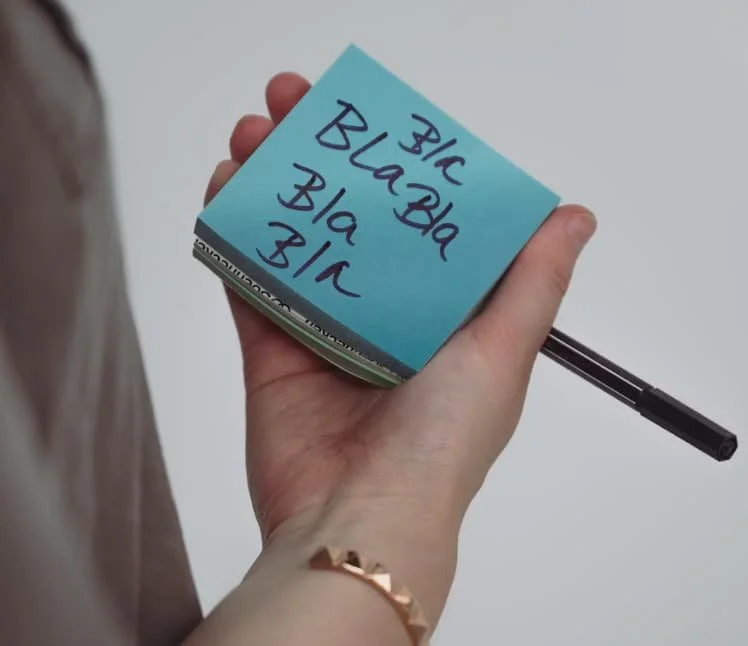
The inner critic often sounds less like insight and more like relentless mental commentary
Photo by Jens Riesenberg via Unsplash
You didn’t technically forget to reply to the email.
You saw it.
Thought about it.
Started drafting a reply in your head.
Then came the worry about getting it right.
So you waited until you had “a little more time.”
But enough time passed that replying started to feel awkward.
Then the awkwardness became dread.
Then the dread became shame.
And now your nervous system is acting like you committed a felony instead of delaying a response for four days.
irresponsible
selfish
disappointing
probably bad at your job
somehow one unanswered email away from being a failure
Meanwhile, someone else out there might have ignored 12 texts, ghosted a few people, and is enjoying a cup of coffee without a single intrusive thought.
Highly Sensitive People tend to develop brutal inner critics because we notice everything
Tone shifts.
Facial expressions.
Changes in energy.
A reply that takes a bit too long.
Tiny signs someone might be irritated, disappointed, uncomfortable, bored, or pulling away.
A lot of us learned early that paying attention kept us safe.
So we became hyperaware.
Hyper-responsible.
Hyper-vigilant.
And eventually, that vigilance turned inward.
The Inner Critic Usually Starts as Protection
It forms slowly.
Sometimes when emotions were unpredictable.
Love was conditional.
Staying small earned approval.
Sometimes after bullying, rejection, trauma, or years of feeling like the weird one in the room.
The outsider.
A lot of highly sensitive people become incredibly good at paying attention to themselves. Mostly to figure out what they think they did wrong.
Don’t upset anyone.
Don’t need too much.
Don’t embarrass yourself.
Don’t miss the cue.
Don’t become a problem.
It starts as a nervous system strategy:
If I criticize myself first, maybe nobody else will.
Or:
If I can catch every mistake early enough, maybe I can avoid rejection.
At first, that strategy actually “works.”
Teachers praise you.
Bosses trust you.
People describe you as dependable, insightful, emotionally intelligent... an old soul.
Inside, though?
Exhaustion.
Constant pressure.
And sometimes guilt.
Because every compliment becomes something else to live up to.
Understanding where the inner critic comes from is only the beginning. The next step is learning how to change your relationship with it. Your Inner Critic Isn't the Enemy explores that next step.
When Anxiety Starts Looking Like Responsibility
This is one of the hardest things to untangle in therapy.
Most highly sensitive people don’t even realize how harsh they are with themselves because the criticism seems rational.
Necessary, even.
Like:
“I’m not being mean to myself. I’m just being accountable.”
But there’s a difference between accountability and psychological warfare.
A healthy inner voice says:
“Hey, you messed up. Let’s fix it.”
A brutal inner critic says:
“You’re the mistake.”
And over time, that kind of internal environment wears people down.
It becomes almost impossible to rest.
Relaxation starts triggering guilt.
Mistakes can feel catastrophic.
Conflict feels physically threatening.
Suddenly every interaction needs to be analyzed.
You replay conversations in the shower.
While driving.
At 2 AM.
Suddenly convinced your email sounded cold, rude, awkward, or “too much.”
Perfectionism Is What Anxiety Looks Like When It’s Socially Rewarded
A lot of highly sensitive people were praised for being “good.”
Responsible.
Insightful.
Helpful.
Advanced for their age.
Emotionally mature.
But many of us weren’t actually calm.
We were scanning.
Trying to stay connected.
Trying to stay safe.
Trying to avoid criticism, chaos, abandonment, humiliation, or becoming a burden.
The same patterns that fuel perfectionism and people-pleasing.
Perfectionism often grows out of that exact soil.
Not vanity.
Not superiority.
Fear.
Fear disguised as responsibility.
The Problem Is That It Sounds Reasonable
The inner critic rarely sounds openly cruel.
It sounds responsible.
Reasonable.
Mature.
It says:
“You should rethink that text.”
“You should apologize again.”
“You should’ve handled that better.”
“You’re probably overreacting.”
“Don’t make this about you.”
“Why are you still upset about this?”
After a while, anxiety starts disguising itself as wisdom.
Harshness becomes confused with accountability.
Overthinking becomes confused with emotional intelligence.
Self-punishment becomes confused with humility.
And because Highly Sensitive People are often deeply conscientious, empathetic, and self-aware, this pattern can hide in plain sight for years.
Sometimes decades.
Living Under Constant Internal Surveillance
People with brutal inner critics often look extremely functional from the outside.
They’re the dependable friend.
The emotionally intelligent partner.
The thoughtful employee.
The person who notices tension before anyone else does.
The one who remembers birthdays, rereads emails, replies carefully, apologizes quickly, and worries about whether their tone sounded “off.”
But internally?
They’re managing a nonstop invisible performance review.
Did I say too much?
Too little?
Was that weird?
Should I apologize again?
Did they sound distant?
Are they upset?
Was I a disappointment?
Am I a burden?
After years of living this way, your nervous system can stop distinguishing between:
making a mistake
and
becoming unsafe.
So a mildly awkward interaction can trigger the same physiological alarm as actual danger.
Your chest tightens.
Your stomach drops.
Your brain starts scanning for signs something is wrong.
You mentally rehearse explanations, apologies, escape routes.
Not because you’re dramatic.
Because somewhere along the line, your nervous system learned that mistakes carried emotional consequences.
How My Nervous System Turned Billing Emails Into Emotional Threats
I spent the first few years working with my billing person convinced she was mad at me.
Why?
Because she communicates directly.
She writes things like:
“You forgot this form.”
“I didn’t see the insurance information.”
“Why wasn’t this included?”
No hostility.
No attack.
No actual evidence she was upset.
She was — and still is — literally doing the job I pay her to do:
noticing what I missed
catching incomplete information
following up on errors
helping me run a functioning practice
Intellectually, I understood that.
Nervous-system-wise?
Every correction felt loaded.
Not just:
“You missed something.”
But:
“You’re irresponsible.”
“You’re failing.”
“You should’ve caught this already.”
Like I somehow failed.
Like I was one administrative mistake away from getting fired.
Some part of my nervous system genuinely believed:
Eventually she’s going to realize you’re a complete fuckup.
Not because she said that.
Because shame already had.
Healing Isn’t Becoming Less Sensitive
Let’s face it: most of us never learned the difference between reflection and self-punishment.
It’s taken a lot of work for me to recognize that those meanings were not actually coming from other people.
They were often coming from my inner critic.
That’s the thing about a brutal inner critic:
it can turn ordinary accountability into perceived emotional danger.
When your nervous system is wired to associate mistakes with shame, even neutral feedback can feel emotionally threatening.
Healing for many Highly Sensitive People is not learning how to stop noticing everything.
It’s learning that noticing everything does not require attacking yourself for it.
Sensitivity is not the problem.
Living in permanent self-surveillance is.
The goal is not becoming careless.
Or shallow.
Or emotionally oblivious.
It’s learning that your worth is not hanging by a thread every time you make a mistake.
That you can miss an email, misunderstand a tone, forget a form, disappoint someone, or say the wrong thing sometimes…
…and still remain fundamentally worthy of connection, care, and belonging.
Even before you fix it.
A note: I write about the complicated, funny, painful, and sometimes absurd business of being human. This is personal reflection, not therapy.